What Is 'House Edge' and Why It Matters More Than Luck
The house edge is the single number that explains casino games. Once you can read it, every game on the floor becomes comparable.
By Dana Reyes, Games editor · Published May 28, 2026 · Updated Aug 19, 2026 · 7 min read
House edge explained simply: it is the gap between what a wager pays and what it should pay if the game were even. That gap, expressed as a percentage of each amount wagered, is how a casino makes money without needing any individual player to lose.
It is the most useful number in the building, and it is almost always published.
A clean example
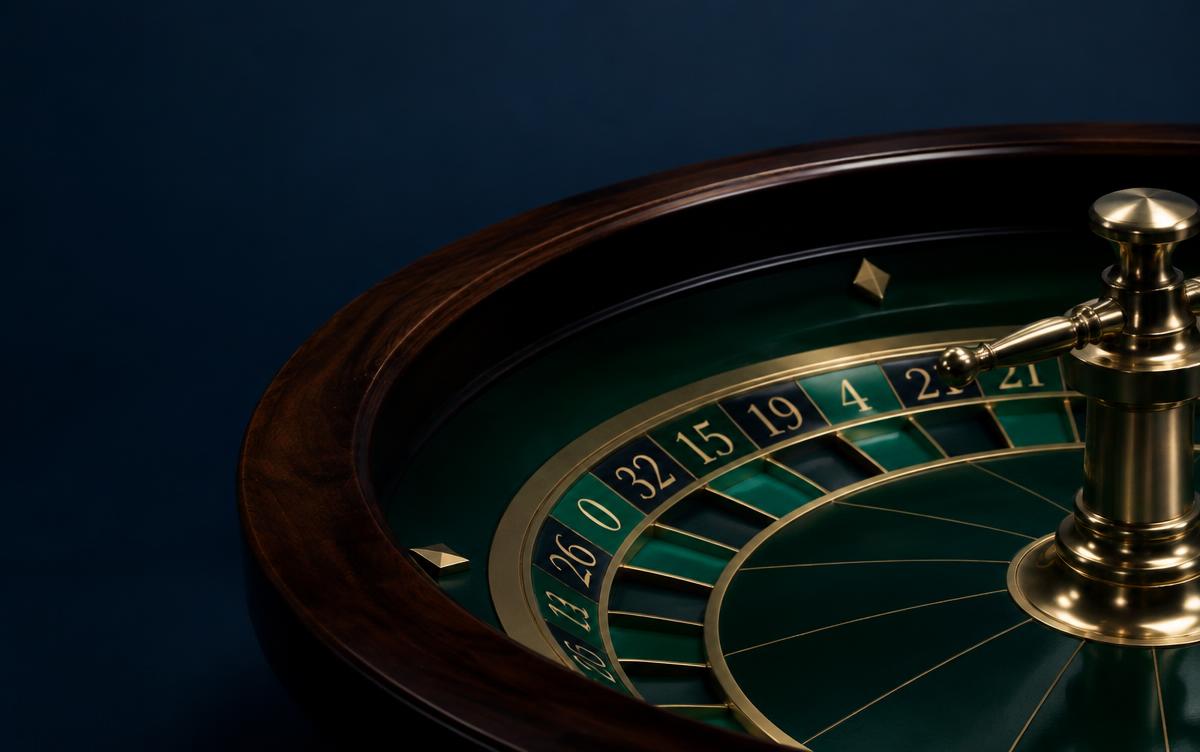
On a European roulette wheel there are 37 pockets. A wager on a single number pays 35 to 1. If the payout matched reality it would pay 36 to 1. That missing unit, spread across 37 outcomes, works out to roughly 2.7% — the house edge.
Every casino game uses a version of this arrangement. The payout is slightly smaller than the true odds, and the difference is the business model.
House edge vs. RTP
Slots usually advertise RTP, table games usually quote house edge, and the two are the same measurement from opposite ends. A 96% RTP slot has a 4% house edge. Neither figure tells you what will happen tonight — both describe long-run averages across huge numbers of wagers.
How common games compare
| Game or wager | Typical house edge |
|---|---|
| Blackjack with basic strategy | ~0.5% |
| Craps pass line with odds | Under 1% |
| Baccarat banker wager | ~1.06% |
| European roulette | ~2.7% |
| American roulette | ~5.26% |
| Typical slot machine | 2% to 10% |
| Keno and big wheel games | 20%+ |
Speed matters as much as percentage
House edge is charged per wager, so the number of wagers per hour matters enormously. A slot spinning 600 times an hour at 4% costs far more per hour than a roulette table at 2.7% spinning 40 times.
The practical formula: expected hourly cost equals average wager × wagers per hour × house edge. A £2 wager, 500 spins an hour, 4% edge, works out to about £40 an hour on average. That is a useful way to budget an evening.
Variance is why anyone ever wins
The house edge is an average, and averages only assert themselves over large samples. In a short session, variance dominates — which is exactly why people win, why streaks feel meaningful, and why a game with a 4% edge can leave you up for an hour.
Over thousands of wagers, variance shrinks relative to the edge. The casino gets the large sample; you do not.
How to use this number
- Compare games before you sit: baccarat's banker wager and blackjack basic strategy sit at the low end.
- Avoid the side wagers — they nearly always carry a much higher edge than the main game.
- Check the rules, not just the game name: 6:5 blackjack and double-zero roulette are worse versions of familiar games.
- Treat the hourly cost as a ticket price rather than an investment that might pay out.
About the author
Dana Reyes, Games editor
Dana has spent a decade writing rules explainers and probability breakdowns for beginners. She learned craps standing at a table with a printed cheat sheet and has been translating game maths into plain English ever since.
Share