Craps Explained: A Simple Guide to the Table and Your First Wagers
Craps is the loudest game in the room and the most intimidating layout to read. In practice, you only need two wagers to start.
By Dana Reyes, Games editor · Published May 1, 2026 · Updated Jul 22, 2026 · 7 min read
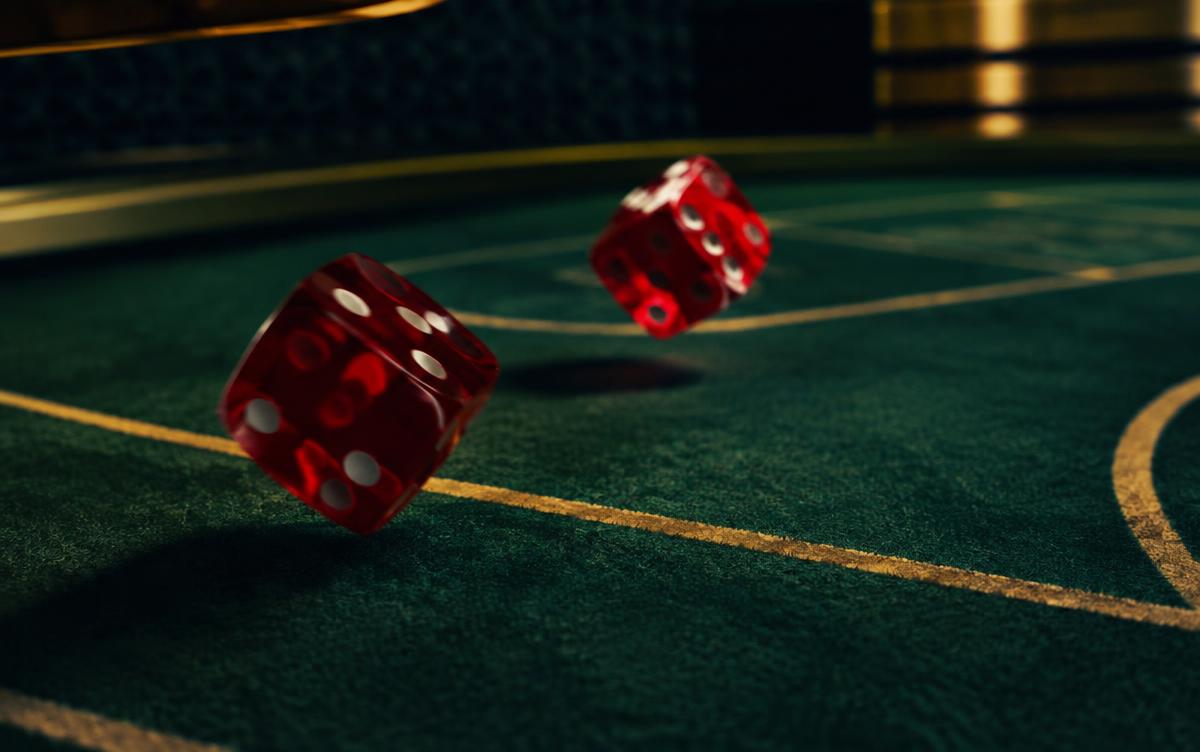
Craps explained in one sentence: players wager on the outcome of two dice, one player rolls, and the table cheers together on most wagers. The layout looks overwhelming because it shows every possible wager at once — but the wagers worth knowing take up a small corner of it.
Here is the structure of a round, the handful of wagers that matter, and the etiquette that stops you from disrupting the game.
Start with the dice
Two dice produce 36 equally likely combinations. Seven is the most common total because it can be made six different ways; 2 and 12 can each be made only one way. Every wager on the craps layout is priced against these 36 combinations.
Keeping that in mind makes the rest of the game readable: the further a total is from seven, the rarer it is and the more it pays.
The come-out roll
- A round begins with the come-out roll, marked by a puck showing OFF.
- Rolling 7 or 11 wins immediately for pass line wagers.
- Rolling 2, 3, or 12 — craps — loses for pass line wagers.
- Any other number becomes the point, and the puck flips to ON over that number.
Playing the point
Once a point is set, the shooter keeps rolling. Pass line wagers win if the point is rolled again before a seven, and lose if a seven comes first. That is the entire core of the game — everything else is optional decoration.
When a seven ends the round, it is called sevening out, the dice pass to the next player, and a new come-out roll begins.
The wagers worth knowing
The odds wager is genuinely unusual: it pays true odds with no house edge at all. It is not printed on the layout, and you have to ask for it. Adding odds behind a pass line wager lowers your overall house edge across the money you have in play.
| Wager | Roughly what it costs you | Notes |
|---|---|---|
| Pass line | About 1.41% | The standard wager; wager with the shooter |
| Don't pass | About 1.36% | Slightly better, but you win when the table loses |
| Odds (behind the line) | 0% | A true-odds wager, available only after a point is set |
| Come / don't come | Same as pass / don't pass | Starts a fresh point for you mid-round |
| Any seven | About 16.9% | The worst wager on the table |
Table etiquette
- Keep your hands out of the rolling area once the shooter has the dice.
- Place cash on the felt for chips; do not hand it to the dealer directly.
- Wagers on the proposition squares in the centre are called out to the stickperson, not placed by hand.
- Saying the word 'seven' at a table mid-roll is considered bad form. Nobody will remove you, but expect a look.
A realistic first session
Find a low-minimum table, place a pass line wager, and simply follow the puck for a few rounds. Add an odds wager once the rhythm makes sense. That is a complete, low-edge way to play craps — and it means ignoring about 80% of the layout, which is exactly the right instinct.
If the pace appeals but the noise does not, the same probability ideas show up more quietly in our guide to the house edge.
About the author
Dana Reyes, Games editor
Dana has spent a decade writing rules explainers and probability breakdowns for beginners. She learned craps standing at a table with a printed cheat sheet and has been translating game maths into plain English ever since.
Share